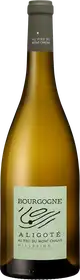
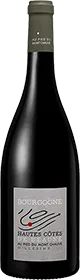
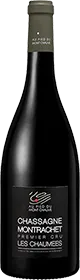
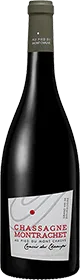
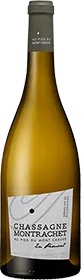
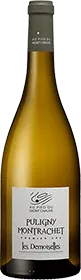
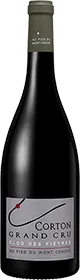
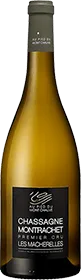
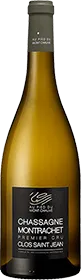
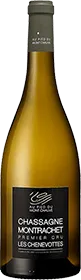
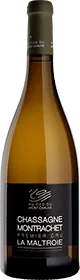
The name sparks curiosity, and the story behind it is just as captivating. For the people of Burgundy, “Mont Chauve” is none other than the age-old nickname for the hill of Montrachet. It is here that Francine Picard, heir to one of Burgundy’s oldest winegrowing families, chose to write her own score, guided by a steadfast conviction: to let the places speak for themselves.
Precisely crafted whites and delicate reds at the heart of the Côte de Beaune
Regional Bourgogne and Hautes-Côtes de Beaune wines: purity and precision
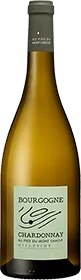
Bourgogne Chardonnay and Bourgogne Aligoté offer a superb introduction to the estate: they faithfully reflect a philosophy of precision applied to each parcel. The freshness is vibrant, the fruit clearly defined, with purity and precision.
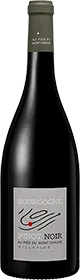
Bourgogne Pinot Noir and Hautes-Côtes de Beaune reds express the estate’s character with the same rigor. Bright red fruit, delicate tannins, silky texture: these wines charm with their clarity and straightforward aromatic expression.
Saint-Aubin Premier Cru: the grace of a remarkable terroir
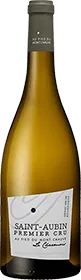
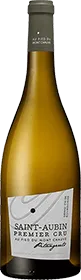
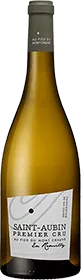
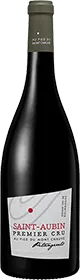
Saint-Aubin remains, for many enthusiasts, one of the best-kept secrets of the Côte de Beaune. Le Charmois, Pitangerets and En Remilly in white deliver Chardonnays of remarkable precision, taut, mineral, with that saline finish that distinguishes truly singular terroirs. Less opulent than their neighbors from Chassagne or Puligny, they make up for it with a vibrancy and tension that give them a very distinctive charm.
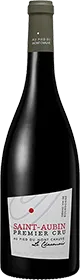
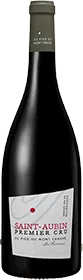
The red expressions of Saint-Aubin, Le Charmois, Pitangerets and Les Frionnes, reveal a Pinot Noir of great finesse. Lightly extracted and delicate, they display aromas of fresh red fruit enhanced by subtle floral notes, with a beautifully nuanced texture on the palate.
Chassagne-Montrachet, village and Premier Crus: exceptional wines
Chassagne-Montrachet is the favored territory of Au Pied du Mont Chauve, with a range of Premier Crus among the most sought-after of the appellation: Les Chenevottes, Les Caillerets, Clos Saint Jean, Les Macherelles, Les Vergers, La Maltroie, Les Chaumées. The whites reveal remarkable aromatic breadth, combining the characteristic density of Chassagne with a freshness that gives them excellent aging potential.
The estate also produces reds of rare elegance, notably the Premier Cru Les Chaumées and the village Concis des Champs. Crafted with the same focus on revealing the purity of the terroir that guides all the reds, they offer a silky mouthfeel, fine tannins, and exceptionally pure fruit.
Puligny-Montrachet Premier Crus: the quintessence of Burgundy Chardonnay
La Garenne and Les Demoiselles, the two Premier Crus of Puligny-Montrachet in the range, embody the very best that Côte de Beaune Chardonnay can offer. Finesse and depth intertwine with natural elegance, carried by the mineral tension characteristic of the appellation. Wines of great purity, whose complexity fully unfolds after a few years in the cellar.
Les Demoiselles, an exceptional climat bordering Chevalier-Montrachet, produces one of the estate’s most accomplished whites. Its delicate nose, with notes of white flowers, citrus, and toasted hazelnut, precedes a full and precise palate, supported by a structure that provides balance and aromatic persistence. A wine that rewards patience.
Corton Grand Cru "Clos des Fiètres": the pinnacle of the red range
The only red Grand Cru in the selection, Corton "Clos des Fiètres" represents the high point of a range built around precision. Produced from one of the Côte de Beaune’s most noble appellations for Pinot Noir, it combines Corton’s inherent structural power with the delicate style that characterizes the entire production. A wine for aging, whose expression unfolds over time.
A family story rooted at the foot of Burgundy’s most iconic hill
Chassagne-Montrachet, at the heart of a trio of exceptional villages
Located in the heart of the Côte de Beaune, the estate spans three top-tier winegrowing villages: Chassagne-Montrachet, Puligny-Montrachet and Saint-Aubin, along with a presence in the Grand Cru Corton.
Michel Picard, Francine Picard: two generations, one shared standard of excellence
Founded in 1951 by Louis Félix Picard, Domaine Famille Picard is based in Chassagne-Montrachet. In its early days, the estate covered just 2 hectares of vines in the commune of Chagny. His son Michel joined him as a teenager, leaving school at 15 to fully commit alongside his father. Over the years, he patiently expanded the estate by acquiring some of the finest parcels in the Côte de Beaune.
Today, the estate spans 140 hectares of vineyards, divided between the Côte Chalonnaise and the Côte de Beaune across four distinct estates. Among them, the Au Pied du Mont Chauve estate, entirely managed by Francine Picard, passionately continues the family legacy.
A vineyard of remarkable precision
A geology that tells the story of the place
The Côte de Beaune rests on a remarkably complex geology. The hill of Montrachet, known as “Mont Chauve,” is composed of layers of oolitic limestone, clay, and marl, whose nature varies according to the altitude and exposure of each parcel.
This geological foundation gives rise to the wines’ most distinctive characteristics: pronounced minerality, natural tension in whites, and a silky texture in reds. Francine Picard translates this geological reading into her vineyards with meticulous care. Au Pied du Mont Chauve does not vinify appellations but places—and it is in this nuance that the essence of her approach likely lies.
Chardonnay and Pinot Noir as emblems
The estate covers 35 hectares of vines spread across around twenty climats, from regional appellations to the Grand Cru Corton. Chardonnay and Pinot Noir make up the majority of the production, alongside Aligoté.
A vineyard with vines averaging fifty years of age, whose root maturity directly contributes to the depth of the wines.
Biodynamics as a compass, life as a tool
Biodynamic viticulture shapes all work in the vineyard: these practices aim to stimulate microbial life in the soil and strengthen the natural vitality of the vines, in a logic of harmony between the environment and what it produces.
Plowing is carried out by horse on certain parcels, preserving soil structure without mechanical compaction. Harvesting is exclusively manual, with rigorous sorting in the vineyard followed by a second selection upon arrival at the estate, retaining only grapes that meet the estate’s exacting standards.
Winemaking designed to reveal the purity of the terroir
Chardonnay is harvested in crates and whole-cluster pressed using a pneumatic press. The juice is naturally clarified in stainless steel tanks before being transferred directly into barrels to undergo alcoholic fermentation in accordance with Burgundian tradition. Extended aging on lees, partly in oak, then shapes the texture and depth characteristic of the estate’s whites.
The reds follow a different approach, faithful to the singularity of the terroir: 100% destemmed Pinot Noir, vinified in temperature-controlled open vats with a method that favors infusion over extraction. Silky tannins, preserved fruit: this discipline explains the distinctive mouthfeel of these wines. Aging in Burgundian barrels, with a moderate proportion of new oak, refines the wines.