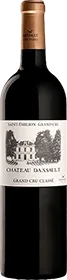


Château Dassault 2024
En Primeur Wines – delivery in early 2027
 Guaranteed provenanceWines sourced directly from the producing estates
Description
Characteristics and Tasting Advice for Château Dassault 2024
Tasting
Color
The color displays a beautiful garnet red hue with violet reflections, clear and bright.
Nose
The nose expresses itself with aromas of fresh fruits, dominated by morello cherry notes.
Palate
On the palate, this wine reveals itself to be fruity and indulgent, with characteristic notes of English candies. The texture is ripe, full and juicy, offering a lovely overall balance.
The Freshness and Creaminess of a Grand Cru Classé from Saint-Émilion
The Estate
In 1955, Marcel Dassault, at the helm of the group that bears his name, purchased the then-neglected estate known as Château Couperie. Enchanted by the quality of this terroir located on the northern slope of Saint-Émilion, he undertook a major restoration campaign. This renaissance culminated in a name change: the property became Château Dassault. A few years later, in 1969, the estate was honored by its inclusion in the classification of Grands Cru Classés.
The Vineyard
Located on the northern slope of the Saint-Émilion hillside, the vineyard of Château Dassault covers 39 hectares, 30 of which are in production. The vines, averaging 21 years of age, are planted on various soil types: clay-limestone hillside, clay over limestone substrate, sandy-clay and clay-sand soils. This diversity of terroirs contributes to the complexity and aromatic richness of the wines.
The Vintage
The year 2024 began with a very rainy winter (+41%) and mild temperatures (+0.7 °C), promoting early budbreak as early as March 15, two weeks ahead of schedule. Spring proved cool and very wet, with 58% more rainfall in May. Flowering of the early Merlots began on May 27. Unlike the Merlots, the Cabernets did not suffer from coulure and were not impacted by the high downy mildew pressure. The hot and dry summer slowed veraison, which began on July 25 with a 7 to 10-day delay. A hot and dry August allowed for ideal grape ripening.
Vinification and Aging
A rigorous selection was carried out (15 to 20% discarded) to keep only the highest quality berries. Parcel-by-parcel vinification in stainless steel vats. Extraction is carried out gently, with classic pump-overs and punch-downs, followed by a 4-week maceration. Aging for 12 to 16 months depending on the parcels takes place in various vessels: 61% in new barrels, 14% in vats, 13% in foudres, 8% in one-wine barrels and 4% in amphorae, bringing complexity and finesse to the wine.
Blend
71% Merlot, 25% Cabernet Franc and 4% Cabernet Sauvignon.