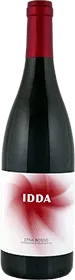
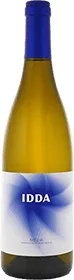
In Sicilian dialect, "idda" means "she". This is how locals refer to Etna, the giant of fire and snow that towers over the eastern coast of the island. It is also the name that Angelo Gaja and Alberto Graci chose, in 2017, to seal the first joint venture in their respective histories.
Two visionaries, one conviction
Angelo Gaja, a guiding figure of Barbaresco, had kept since the late 1990s the vivid memory of an excursion on the slopes of Etna, undertaken alongside oenologist Giacomo Tachis. For his part, Alberto Graci had been growing Nerello Mascalese on the northern flank of the volcano since 2004. Their meeting in 2015 gave rise to a shared conviction: the future of Etna also lies on its south-western flank, the volcano's least-known side.
Between Biancavilla and Belpasso: a terroir forged through the ages
It is here, between Biancavilla and Belpasso in the heart of Sicily, at an altitude ranging from 600 to 820 metres, that the IDDA vineyard takes root. The soils of Biancavilla carry the geological memory of the Ellittico, a volcano extinct for more than 50,000 years. More clayey and silty than the surrounding lands, they lend the wines a singular depth. In Belpasso, the landscape changes: stony and sandy soils, outcropping rocks, an opening towards the Catania plain. The thermal amplitude there reaches an average of 18°C, imposing slow ripening, conducive to preserving acidity and developing aromatic complexity.
Two cuvées, the imprint of a volcano
Two cuvées embody this geological richness: the Etna Rosso 2023 unfolds notes of blood orange, pistachio and terracotta, supported by a fine tannic structure and a minerality evoking flint. The Sicilia Bianco 2024, for its part, releases aromas of lime, white almond and wild herbs, run through by a lively acidity and a resolutely saline finish.
Humility as a philosophy, terroir as a compass
"We recognise that Etna is stronger than anything. Etna will determine the identity of the wine we produce, and we will follow it."
These words from Alberto Graci reflect a profound humility before the terroir, which guides every decision: from the choice of massal selections to the work in the cellar, in order to express all the greatness of high-altitude wines.