Assistant



 Guaranteed provenanceDirect from the estates
 DeliveryFree Home delivery for orders exceeding € 300
 Secure PaymentVisa, American Express, Mastercard...

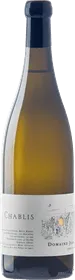
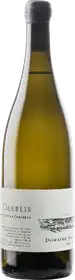
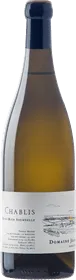
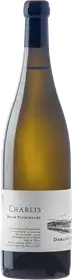
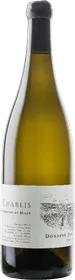
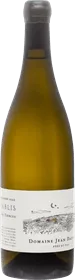
Jean Dauvissat : Chablis 1er cru "Montmains" 2022
In-Stock
Let's talk about this product!
A pairing in mind? A question about the vintage? Comparison with another product? Find the answers here...
Description
Characteristics and tasting notes of the Chablis 1er Cru "Montmains" 2022 by Jean Dauvissat
Tasting
Colour
This white wine reveals a pale, luminous straw-yellow hue, shot through with subtle golden highlights. Its limpidity and crystalline clarity bear witness to meticulous cellar work.
Nose
The aromatic bouquet opens with delicate citrus notes, reminiscent of lemon and its zest, accompanied by an elegant floral touch. With aeration, mineral aromas of iodine and sea spray emerge, underscored by subtle brioche nuances.
Palate
The attack is bright and fresh, carried by a lively acidity that gives structure to the wine. Medium-bodied, the palate offers flavours of candied lemon and mineral salinity, evolving towards stone fruit aromas such as green apple and white peach. Light herbaceous touches round out the whole, leading to a long, flavourful finish marked by fine mineral and citrus persistence.
Food and wine pairing
This wine pairs beautifully with seafood and shellfish, particularly oysters, langoustines or lobster. It is equally wonderful with grilled white fish or fish served with a light butter sauce, white meats such as veal blanquette, as well as aged goat's cheeses or dishes based on asparagus and artichokes.
Service and storage
It is recommended to serve this Chablis 1er Cru "Montmains" 2022 at a temperature between 12 and 14°C, without decanting. While it already offers great pleasure when tasted young, it has the structure needed to evolve favourably in the cellar and can be kept until around 2032.
Other characteristics
This wine ferments exclusively through indigenous yeasts and undergoes complete malolactic fermentation. The estate favours a low-intervention approach, with no chaptalisation and only very light filtration before bottling.
The balance and mineral precision of an emblematic terroir
The estate
Founded in 1955, the Jean Dauvissat Père et Fils estate is located in Milly, at the heart of the Chablis appellation in Burgundy. Although the family has cultivated the vine since 1899, it was Jean Dauvissat who truly initiated estate bottling. Since 2009, Fabien Dauvissat, representing the third generation, has run the property. Under his leadership, the estate has moved away from bulk sales in favour of showcasing its own cuvées. A committed advocate for the environment, he guided the vineyard to organic certification in 2022 and applies the principles of biodynamics, allowing each terroir to express its own individuality.
The vineyard
The estate spans 22 hectares divided into 53 plots across seven communes of the Chablis region. This cuvée comes from the Montmains climat, located on the left bank of the Serein, where the estate cultivates 0.76 hectares of vines averaging around 35 years of age. Facing southeast to northeast at an intermediate altitude, this terroir rests on typical Kimmeridgian limestone soils rich in marine fossils, mixed with marl, clay and stones. The vineyard is farmed organically and draws on biodynamic principles, with regular soil work and a complete absence of herbicides.
The vintage
2022 offered highly favourable climatic conditions, beginning with a mild spring followed by a hot summer. Cool nights helped avoid heat stress, while moderate rainfall protected the vines from drought. Harvest came early, starting at the end of September, yielding grapes in perfect health, with an ideal balance between sugar ripeness and acidity.
Winemaking and aging
The grapes destined for the Chablis 1er Cru "Montmains" 2022 are hand-harvested into small perforated crates, then rigorously sorted. After a long pneumatic pressing and cold settling, fermentation takes place at controlled temperature. Vinification is carried out plot by plot. Aging on the lees lasts from 18 to 24 months and takes place, depending on the lot, in stainless steel tanks, clay amphorae or large wooden foudres, in order to preserve the wine's complexity and aromatic expression.
Grape variety
Chardonnay (100%).