Assistant



 Guaranteed provenanceDirect from the estates
 DeliveryFree Home delivery for orders exceeding € 300
 Secure PaymentVisa, American Express, Mastercard...
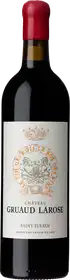
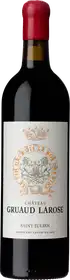
Château Gruaud Larose 2000
In-Stock
Let's talk about this product!
A pairing in mind? A question about the vintage? Comparison with another product? Find the answers here...
Description
Characteristics and tasting advice for Château Gruaud Larose 2000
Tasting
Color
The wine displays a deep, intense ruby-red hue, almost opaque, reflecting the remarkable concentration of this vintage.
Nose
The bouquet reveals great aromatic complexity, with notes of black fruits (blackcurrant, blackberry, plum) accompanied by secondary nuances of tobacco, cedar, and cigar box. Spicy touches of licorice and black pepper add depth, while tertiary aromas of truffle, graphite, and forest floor bring an extra dimension. With aeration, subtle floral notes of dried violet gradually emerge.
Palate
On the palate, the wine is broad and full-bodied while retaining remarkable elegance and finesse. The palate unfolds concentrated flavors of ripe black fruits supported by a precise mineral backbone and earthy notes. The tannic structure, firm and fine-grained, comes across as velvety and sophisticated. The finish lingers at length with impressions of blackcurrant, blackberry, and earth, lifted by a distinctive touch of green tapenade that defines the wine’s personality.
Food and wine pairings
This wine pairs perfectly with grilled or roasted red meats such as ribeye, strip steak, or marrow-topped beef rib. It also beautifully accompanies herb-crusted lamb, game (venison, wild boar, wild duck), as well as truffle-roasted poultry. Umami-rich Asian dishes, meaty fish such as tuna or swordfish, and aged hard cheeses also make excellent gastronomic matches.
Serving and cellaring
Château Gruaud Larose 2000 is ideally served at a temperature of 15.5°C. Decanting for one to two hours allows the wine to open fully and reveal its full aromatic complexity. This wine can be enjoyed until around 2035, or even beyond depending on storage conditions.
A Second Grand Cru Classé of Saint-Julien at the peak of its expression
The estate
Founded in 1725 by Joseph Stanislas Gruaud, Château Gruaud Larose is among the Second Growths of the 1855 Classification in the Saint-Julien appellation, in the Médoc. Established in Saint-Julien-Beychevelle, the estate spans 82 hectares of contiguous vineyards, set on Quaternary Garonne gravel rises. Owned by the Merlaut family (Taillan group) since 1997 and led by Jean Merlaut, the château obtained organic farming certification in August 2022 and applies biodynamic principles.
The vineyard
The Château Gruaud Larose vineyard benefits from an exceptional terroir at the heart of the Saint-Julien appellation. The soils are composed of Garonne gravels deposited during the Quaternary, mixed with quartz, clay, and sand, resting on a clay-limestone subsoil. This higher proportion of clay than in neighboring estates lends the wines a distinctive identity. The vines, averaging 40 to 46 years of age in the 2000 vintage, ensure excellent drainage and optimal thermal regulation, encouraging phenolic ripeness in the grapes.
The vintage
The year 2000 ranks among the greatest Bordeaux vintages of recent decades. After a warm, humid spring, the summer alternated between heat and cool conditions, with a temperate July and a sunny early August. Early veraison, occurring nine days ahead of average on August 6, enabled exceptional ripening. Harvest took place from September to early October under outstandingly healthy conditions, allowing for a level of physiological maturity rarely matched.
Winemaking and aging
The grapes destined for this Château Gruaud Larose 2000 were hand-harvested and transported by conveyor belt to preserve their integrity. Vinification took place in wooden vats of 55 to 115 hectoliters and concrete vats of 50 to 100 hectoliters, with cold soaking to optimize extraction. One-third of the crop underwent malolactic fermentation in new barrels. Aging then continued for 16 to 18 months in French oak barrels, 80% of which were new.
Grape varieties
Cabernet sauvignon (57%), merlot (30%), cabernet franc (8%), petit verdot and malbec (5%).