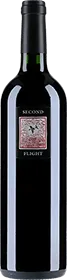
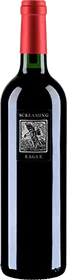
Screaming Eagle 2010
 This product is reserved for "Exclusive Cellar" members, our loyal customers who have reached the Magnum level in our loyalty program. If you are already a member, log in to your account to access it. For more information, visit the Millesima Premium loyalty program page. You can also contact us by phone or email.
In-Stock
Let's talk about this product!
A pairing in mind? A question about the vintage? Comparison with another product? Find the answers here...
Description
Characteristics and Tasting Tips for Screaming Eagle 2010
Tasting
Appearance
The colour is a deep ruby with purple highlights, dense and profound, reflecting a masterful extraction.
Nose
The striking nose reveals a bouquet of spring flowers, graphite, crème de cassis and kirsch, accompanied by notes of liquorice and a touch of subtle toast. Aromas of blackberry and violet complete this aromatic palette, against a backdrop at times lifted by crushed stone, evoking a mineral dimension.
Palate
On the palate, this wine is opulent and expansive, with a multidimensional personality, driven by remarkable purity and a texture of exceptional finesse. Ultra-fine tannins envelop a core of fruit concentration energised by vibrant acidity and a mineral heart. The structure, at once muscular and perfectly integrated, recalls certain great Bordeaux wines, with a core of blackcurrant, cedar and tobacco leaf enriched with touches of mocha. The finish is long and resonant, prolonging the flavours of blackcurrant and subtle spice.
Food and Wine Pairing
This wine is an ideal match for fine red meats, such as beef fillet, dry-aged sirloin or a rib of beef cooked rare to medium. It also pairs beautifully with herb-roasted leg or rack of lamb, as well as with furred game prepared as a stew or a roast. In a more contemporary vein, it can also elevate dishes featuring Wagyu beef, red wine sauce reductions or wild mushrooms.
Serving and Cellaring
Screaming Eagle 2010 is ideally served at a temperature close to 15.5°C, slightly cooler than room temperature, in order to preserve its freshness and the precision of its bouquet. Decanting for one to two hours allows its aromas to unfold fully without tiring the wine.
An Oakville Cabernet Sauvignon with a Silky Texture and Remarkable Precision
The estate
Founded in 1986 by Jean Phillips in the Oakville appellation, Screaming Eagle has established itself as one of the most distinctive estates in the Napa Valley, in California. Entirely replanted in 1995, the vineyard went through several changes in ownership before Stan Kroenke became its sole owner in 2009. Production, deliberately limited to a few hundred cases a year, and distribution controlled through a restricted mailing list, give this estate exceptional rarity and critical renown among the great wines of California.
The vineyard
The vineyard extends over approximately 48.21 acres in the heart of the Oakville appellation, in the Napa Valley, on well-drained, stony soils and gentle west-facing slopes. This setting allows the vineyard to benefit from both generous sunshine and the coolness brought by breezes from San Pablo Bay, favouring even ripening and a fine tannic structure. The vineyard is managed by David Abreu Vineyard Management, assisted by vineyard manager Jorge Delgado.
The vintage
The 2010 vintage stood out for a cool, extended growing season, marked by a wet spring and persistent summer mists that limited excessive heat. A spell of intense heat late in the season called for careful canopy management in order to preserve the phenolic ripeness of the grapes without causing heat stress. These conditions favoured slow ripening, conducive to wines that are fresh, balanced and of great purity.
Winemaking and ageing
This American wine is aged in French oak barrels, with a high proportion of new wood, in a quest to integrate the oak with the fruit rather than to highlight toasty or vanilla notes. The winemaking aims for concentration without harshness, resulting in ultra-fine tannins and a silky texture characteristic of the estate's style.
Grape varieties
Cabernet Sauvignon.